
As of August 2026, the landscape of search has shifted toward "Generative Engine Optimization" (GEO). If you need to track your visibility in AI search results without a massive budget, these three options stand out as top choices:
The year 2025 marked what industry experts call the "Great Decoupling." For decades, SEO was a deterministic game: you optimized for a keyword, and Google placed you in a list from 1 to 100. However, in late 2025, Google officially deprecated the num=100 parameter, effectively breaking traditional budget rank trackers that relied on scraping deep search results. Today, in 2026, search is probabilistic, personalized, and powered by Large Language Models (LLMs).
Tracking your "rank" is no longer about being #1 in a list of blue links. It is about being the primary citation in a ChatGPT response or the featured source in a Google AI Overview (AIO). This article identifies the tools that help you monitor these new visibility metrics—mentions, citations, and sentiment—without requiring an enterprise-level subscription.
Traditional rank tracking has become less effective because the visual real estate of the Search Engine Results Page (SERP) has undergone a radical transformation. According to recent data, a standard "#1 organic rank" is now frequently pushed 1,200 pixels down the page, buried beneath AI Overviews, product carousels, and "People Also Ask" boxes. If a user doesn't scroll, your #1 rank is effectively invisible.
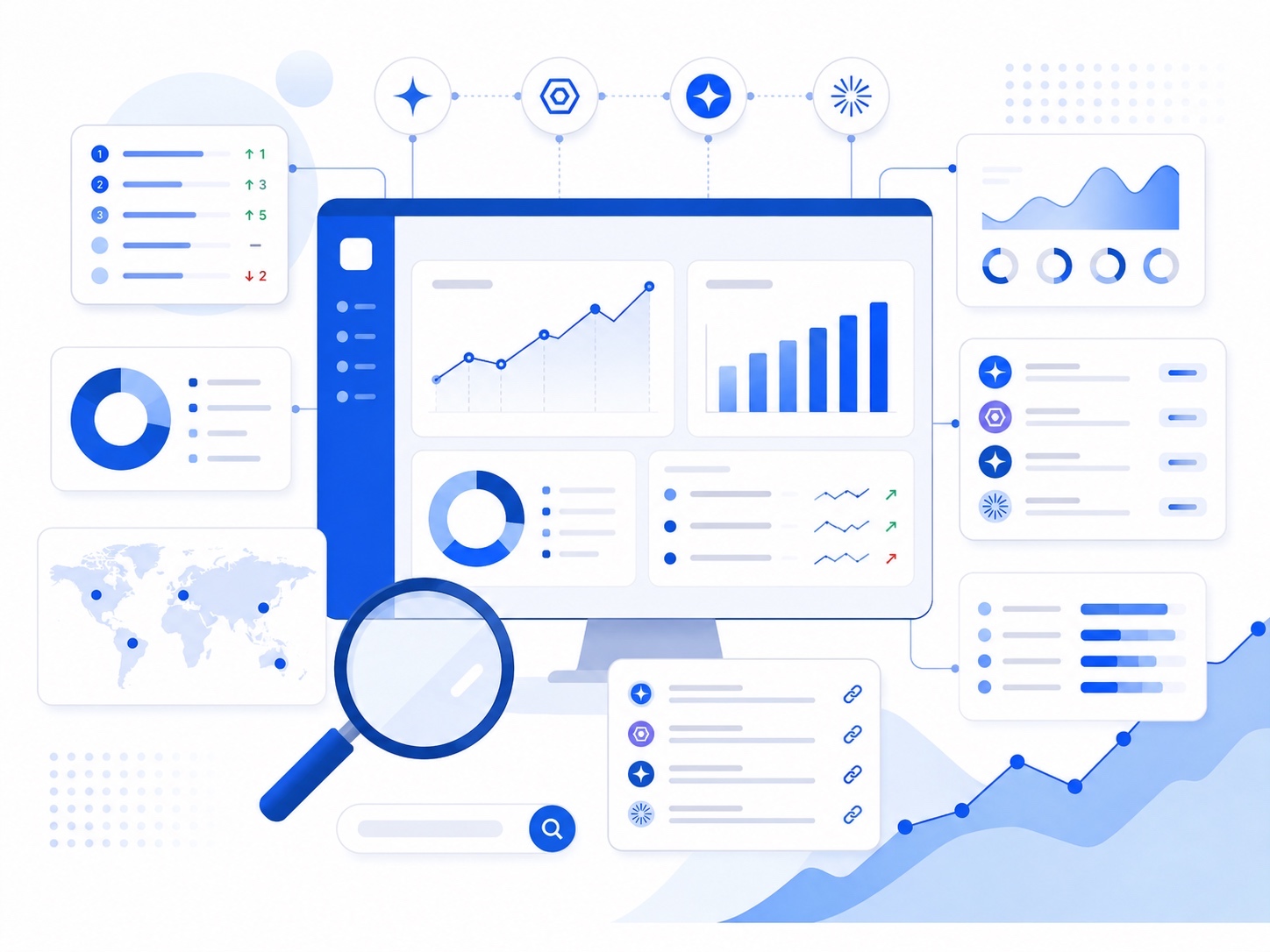
Furthermore, AI search engines like Perplexity and ChatGPT do not use a fixed index. Their responses are generated in real-time based on the model's current training and live web access. This means your brand might appear in 55% of queries one week and only 25% the next, even if your content hasn't changed. This volatility, as noted by Omnia, requires a shift from tracking "position" to tracking "share of voice" across multiple engines including Gemini, Claude, and Copilot.
While many platforms offer trials, these tools provide ongoing free access, making them a top-rated starting point for solopreneurs and small marketing teams.
Teun.ai is widely regarded as one of the most accessible tools for quick spot checks. It allows users to perform two free checks without even creating an account. For those who sign up for a free account, the platform provides two manual checks per week. This is an excellent choice for business owners who want to see how their brand is described by AI without committing to a monthly fee.
For those with technical skills, Cloro stands out for its generous developer tier. It provides 500 free monthly credits via their API. This allows you to build custom dashboards or integrate AI visibility data directly into your own reporting tools. Cloro is particularly strong at tracking how different LLMs interpret technical documentation and product specifications.
This tool focuses on the "Instant Visibility Report," a snapshot of how your brand is mentioned across major LLMs. It is a popular choice for getting a baseline understanding of your "Citation Share"—the percentage of time an AI links to your site when discussing your industry. By focusing on mentions rather than just links, it captures the full scope of modern AI search presence.
If you need deeper data for a specific campaign, these tools offer high-powered features through limited trials or credit-based systems.
A comprehensive study by Coalition Technologies found that Rankscale achieved near 100% accuracy in brand mention detection across thousands of test prompts. While it is a premium tool, they often provide initial credits or trial periods that allow for a deep-dive audit of your AI search presence. It is exceptionally strong at identifying "hidden" mentions where the AI describes your product without explicitly naming it.
Otterly AI focuses on two critical metrics: Mention Rate and Citation Rate. In the GEO landscape, being mentioned is good, but being cited with a link is better. Otterly helps you distinguish between the two. While their full service starts at approximately $29/mo, their initial trial period is a top-tier option for brands looking to benchmark their performance against competitors in Perplexity and Claude.
ZipTie was specifically built to tackle Google's generative summaries. As Google AI Overviews now dominate the top of the SERP, ZipTie provides the granular data needed to see which parts of your content are being "summarized" by Google. This is a significant advancement over traditional scrapers that only see the organic links below the AI box.
Choosing the right tool depends on your technical ability and the specific engines you need to monitor. The following table compares the top-performing free options available today.
| Tool Name | Free Tier Type | Primary Engines | Key Metric | Best For |
|---|---|---|---|---|
| Teun.ai | 2 checks/week | ChatGPT, Gemini | Position | Solopreneurs |
| Cloro | 500 API Credits | Multi-LLM | Raw Mentions | Developers |
| AI SEO Tracker | Instant Report | ChatGPT, Perplexity | Visibility % | Brand Audits |
| Rankscale | Limited Trial | All Major LLMs | Mention Accuracy | Enterprise Testing |
| Otterly AI | Trial Period | Perplexity, Claude | Citation Rate | Competitor Analysis |
If you want to avoid "money traps" and have 100% control over your data, you can build a manual tracking workflow. This method is widely considered one of the most reliable ways to get a "clean" baseline of your AI visibility.
Create a list of 10-20 "Category + Problem" prompts (e.g., "What is the most durable hiking boot for wide feet?"). Avoid using your brand name in the prompt to prevent bias. Standardize these prompts so you can repeat them weekly.
AI models personalize results based on your history. To get an objective view, use clean browser sessions or "Incognito" modes. For ChatGPT and Perplexity, ensure you are logged out or using a fresh session to see what a new user would see.
One of the biggest frustrations in 2026 is the "Ghost Citation" problem—where an AI mentions you in the first response but forgets you in the follow-up. Track "sequential prompt pairs" by asking a follow-up question (e.g., "Which of those is the most affordable?") to see if your brand stays in the AI's consideration set.
In your Google Sheet, mark a "1" if you are cited and a "0" if you are not. Divide the total citations by the number of prompts to get your Citation Share. This metric is a much more accurate reflection of your SEO health than a traditional rank number.
In the GEO era, ordinal numbers (1, 2, 3) are less important than the way the AI presents your brand. Focus on these four pillars:
While free tools are a strong starting point, they come with limitations that you must understand to avoid making decisions based on bad data.
The Scraper Conflict: Many free tools rely on "headless browsers" to scrape AI responses. However, OpenAI and Google frequently update their user interfaces to block these scrapers. This can lead to "false negatives" where a tool reports you aren't ranking simply because it couldn't read the page. Always verify suspicious data with a manual check.
The "Ghost Citation" Problem: As discussed in SEO forums and Reddit, LLMs are probabilistic. A citation that appears for one user might not appear for another, or it might disappear mid-conversation. Free tools often only take a single "snapshot," which might miss this volatility. According to Rankability, 70% of AI Overview results can shift within a 2-3 month period, making consistent tracking mandatory.
API vs. Headless Browsers: Tools that use official APIs (like Cloro) generally provide cleaner data, but they might not see the "Pixel Depth"—the actual layout the user sees. Tools using headless browsers capture the visual reality but are more prone to breaking. A balanced strategy uses both.
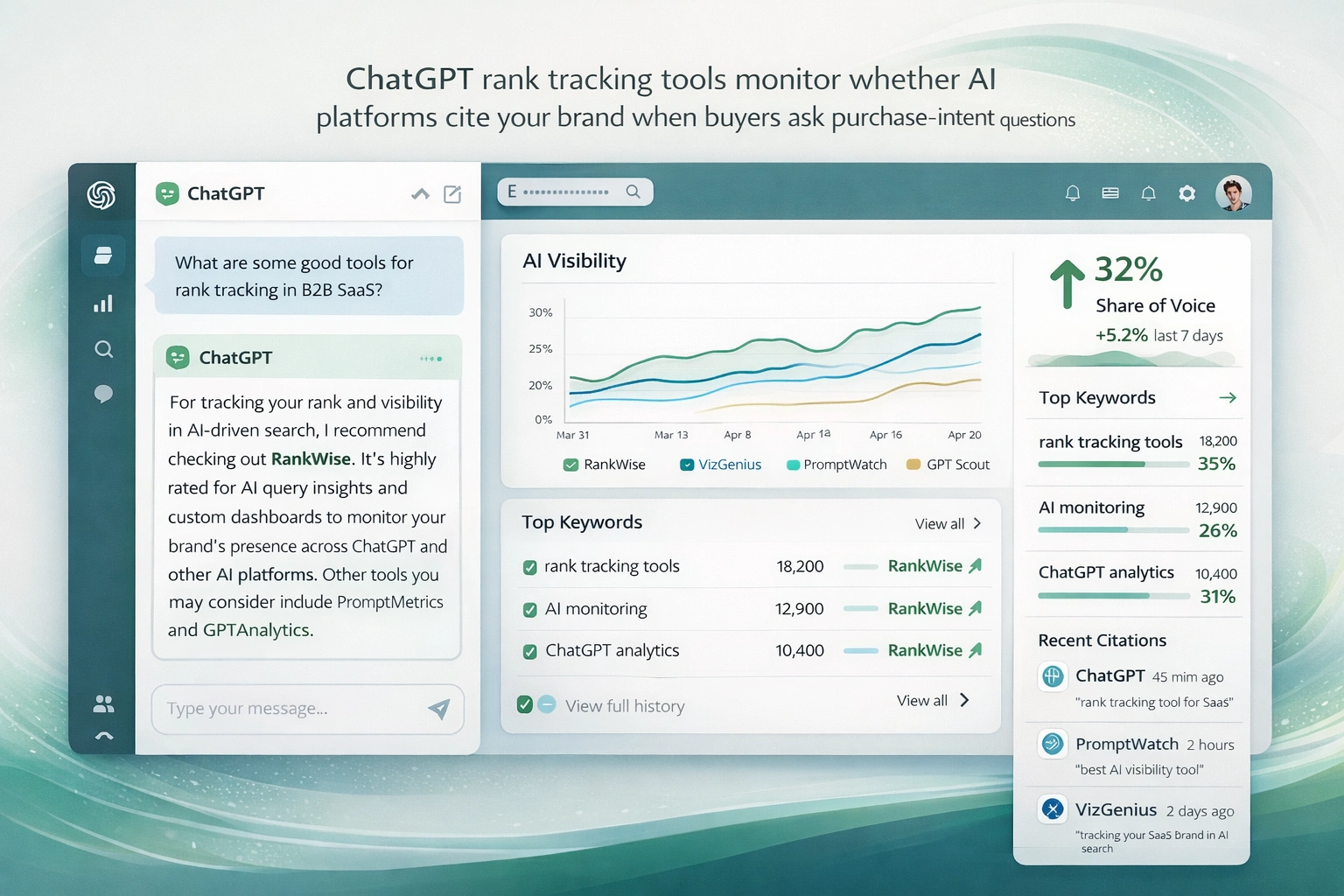
Yes, you can track your visibility in ChatGPT using tools like Teun.ai, which offers a limited number of free manual checks. Alternatively, you can perform manual tracking by using standardized prompts in a clean browser session and recording whether your brand is mentioned or cited in a Google Sheet.
Traditional SEO focuses on optimizing for search engine algorithms to rank in a list of links. Generative Engine Optimization (GEO) focuses on optimizing content so that Large Language Models (LLMs) like ChatGPT and Gemini cite your brand as a primary source within their generated responses. The focus shifts from "links" to "visibility and authority."
Free AI rank trackers provide a strong statistical estimate, but they are rarely 100% definitive. Because LLM responses are probabilistic and personalized, a tool might see a different result than a real user. It is best to use these tools to identify trends over time rather than obsessing over a single day's data.
AI search engines update their citations much more frequently than traditional search indexes. Research suggests that up to 70% of Google AI Overview results can change every 2-3 months. This high volatility means that weekly tracking is the minimum viable cadence for staying informed about your brand's visibility.
Cloro and Otterly AI are among the top options for tracking visibility in Perplexity and Claude. Cloro is particularly useful for those who can utilize its API credits, while Otterly AI's trial period provides deep insights into how these specific models cite brand information compared to competitors.
Navigating the shift to AI search doesn't require a massive budget, but it does require a change in mindset. Here are the key takeaways for 2026:
Start by running a manual audit of your top five industry prompts today to see how AI models currently perceive your brand.
