Best AI HR Software Platforms Comparison 2025 and 2026 Performance Analysis
The integration of artificial intelligence into human resources has moved beyond the experimental phase. According to recent data from Wisq, AI adoption in HR nearly doubled in a single year, rising from 26% in 2024 to 43% by mid-2025. However, a significant "value gap" remains: approximately 88% of HR leaders report they have yet to realize substantial business value from these investments.
This gap is often attributed to the administrative burden that continues to plague the industry. Research indicates that 96.6% of HR leaders still spend more than 25% of their work week on manual administrative tasks. To solve this, the 2025-2026 generation of software is focusing on "Agentic AI"—systems that don't just answer questions but actually perform the work across multiple applications.
Comparing Top AI HR Platforms at a Glance
When evaluating the current market, it is essential to look at "AI Maturity"—how deeply the intelligence is woven into the core functionality rather than just being a "wrapper" for a basic large language model (LLM).
| Platform Name | Primary Strength | AI Maturity | Best For | Starting Price |
|---|---|---|---|---|
| Rippling | Workflow Automation | High | Scaling Mid-Market | $8/user/mo |
| Wisq (Harper) | Reasoning & Tasks | Very High | Policy & Compliance | Contact Vendor |
| Humand | Mobile Engagement | High | Deskless Workers | Contact Vendor |
| Praisidio | People Analytics | Very High | Retention & ROI | Contact Vendor |
| Synk | IT/HR Provisioning | Medium | Early-Stage Startups | Free Tier Available |
| MyCulture.ai | Psychology Alignment | Medium | Culture Building | $29/mo |
Understanding the Difference Between Chatbots and Agentic AI
In previous years, AI in HR was synonymous with chatbots that could answer basic FAQ questions like "How do I reset my password?" or "What is our PTO policy?" In 2026, we are seeing the rise of reasoning engines. A prime example is Wisq’s Harper, which has demonstrated the ability to score 94% on SHRM-CP exam questions—performing roughly 12 times faster than a certified human professional.
Agentic AI differs because it possesses "agency." Instead of just telling you how to update a payroll record, an agentic tool like Moveworks or Wisq can actually log into your HRIS, verify the data against local labor laws, and execute the update autonomously. This shift is expected to contribute significantly to the projected $4.4 trillion in global productivity growth potential identified by McKinsey.
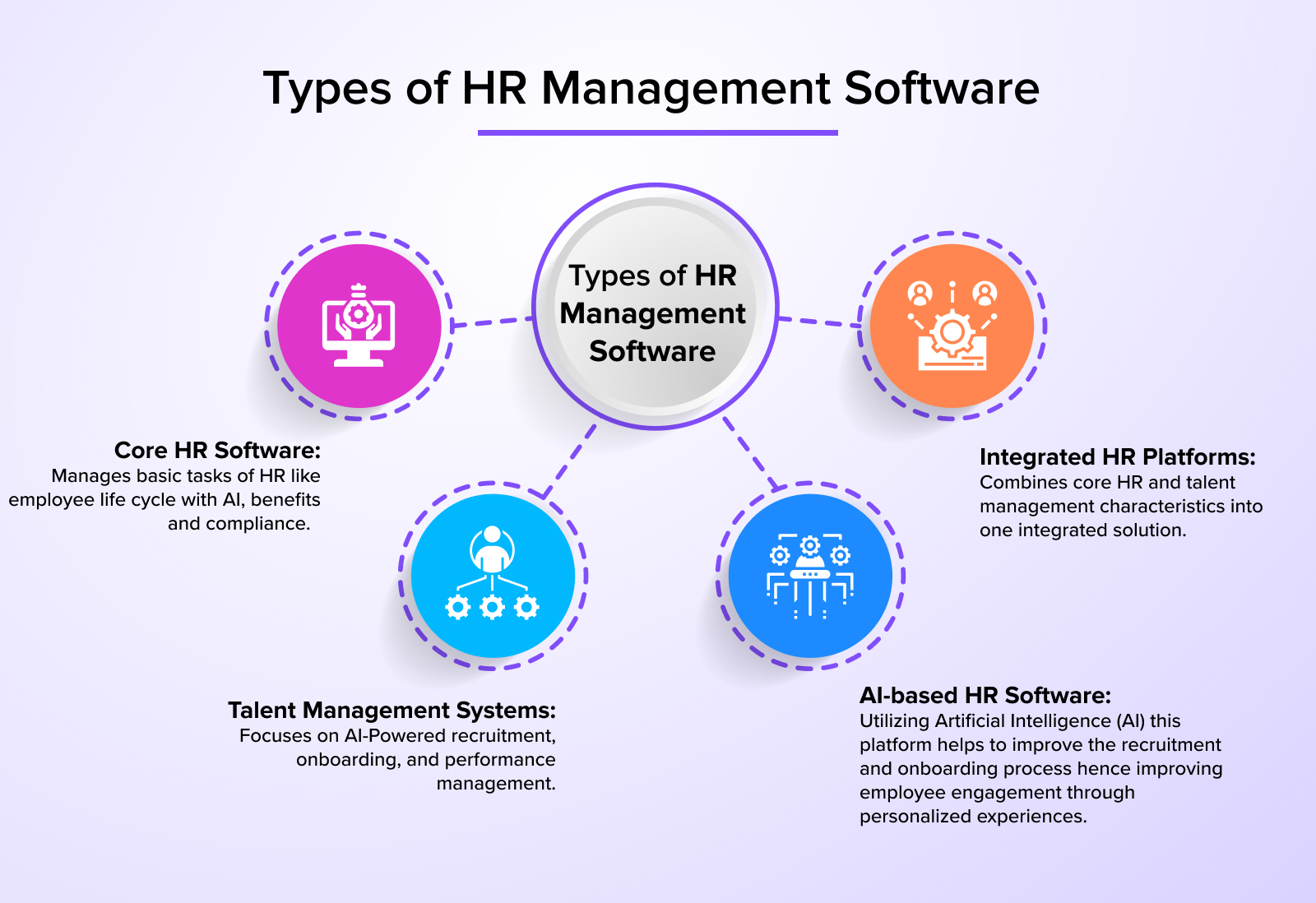
Image source: H2R.ai
AI HR Software for Deskless and Frontline Workers
A common failure in the HR tech market is the "Laptop-Less" gap. Most AI tools are designed for knowledge workers who spend their days in front of a computer with a corporate email address. However, for industries like retail, manufacturing, and logistics, this model is ineffective.
Humand: A Mobile-First Solution for Frontline Teams
Humand stands out as a top-rated choice for organizations with a high percentage of deskless workers. Unlike traditional platforms that require a desktop login, Humand is built specifically for mobile accessibility. It allows workers in the field or on the factory floor to access benefits, sign documents, and engage with company culture without needing a corporate email account. According to Humand's internal testing, this mobile-first approach significantly increases engagement rates compared to standard HRIS portals.
Sammy AI for Rapid Onboarding Workflows
Onboarding in high-turnover industries like hospitality or retail requires speed. Sammy AI has gained traction for its ability to draft shift-specific onboarding checklists in under 10 seconds. By analyzing the specific requirements of a role and the location's safety protocols, it generates a tailored plan that ensures new hires are compliant and productive from day one. This level of automation is a significant step forward for managers who previously spent hours on repetitive paperwork.
Agentic AI Tools That Move Beyond Simple Chat
The most impactful advancements in 2025 and 2026 involve tools that act as autonomous assistants. These platforms are designed to reduce the 96.6% administrative burden by taking over the "doing" of HR, not just the "answering."
Wisq and the Rise of the Reasoning Engine
Wisq’s assistant, Harper, represents the vanguard of this movement. By utilizing a reasoning engine rather than a simple text predictor, Harper can navigate complex policy documents and apply them to specific employee situations. For instance, if an employee asks about maternity leave in a specific state, Harper doesn't just link to a PDF; it calculates the specific dates, checks the employee's eligibility based on tenure, and drafts the necessary approval forms for the manager.
Moveworks for Autonomous Employee Service
Moveworks has become a popular choice for large enterprises looking to automate employee service across both IT and HR. It integrates deeply with platforms like Slack and Microsoft Teams, allowing it to resolve tickets without human intervention. Whether it's a payroll discrepancy or a request for a new laptop, Moveworks uses natural language understanding to identify the intent and then uses its "agents" to complete the task in the background.
Praisidio for Real-Time People Analytics
Data-driven decision-making is often slowed down by the time it takes to clean and analyze data. Praisidio claims to be 100x faster than manual people analytics processes while costing roughly 1/10th of the price of traditional consulting. It monitors "digital exhaust"—anonymized signals from communication and collaboration tools—to predict burnout and turnover risks before they manifest. This allows HR teams to move from reactive exit interviews to proactive retention strategies.
Image source: Humand
AI Platforms for Global Compliance and Payroll
Managing a global workforce introduces legal complexities that are nearly impossible to track manually. AI has become the primary defense against compliance pitfalls in international hiring.
G-P Gia vs Deel: The Global Compliance Landscape
- Reach: 180+ countries.
- AI Focus: Gia acts as a compliance advisor, monitoring local labor law changes in real-time.
- Strength: Highly effective for large enterprises needing deep legal certainty in emerging markets.
- Reach: 130+ countries.
- AI Focus: Automation of contract generation and localized tax document collection.
- Strength: A leading choice for fast-moving startups and the "contractor-to-employee" pipeline.
According to HR Morning, G-P Gia’s ability to provide instant, localized legal advice is a major differentiator for companies expanding into regions with volatile regulatory environments.
Witty: Reducing Bias in Internal Communications
Inclusion is a core component of modern HR, and Witty provides a notably innovative approach to maintaining it. As employees write emails or job descriptions, Witty provides a real-time "Bias Score" and suggests inclusive alternatives. This helps organizations build a more equitable culture by catching unconscious bias at the source, rather than trying to correct it during annual reviews. According to Lattice, this type of real-time coaching is far more effective at changing behavior than traditional diversity training.
AI HR Software for Small Businesses and Startups
Small businesses often lack the budget for "Enterprise" tiers of software, but they still face the same administrative challenges. New tools are bringing high-level automation to the SMB market at accessible price points.
Synk: Enterprise-Level Provisioning for Growing Teams
One of the most time-consuming tasks for a small HR team is "provisioning"—setting up new hires in Slack, Jira, GitHub, and other tools. Synk offers a solution that was previously only available to large corporations. It allows small teams to sync their HRIS (like BambooHR or Gusto) with their tech stack, automatically granting or revoking access as employees join or leave. This reduces security risks and ensures new hires have everything they need on day one without manual intervention from IT.
MyCulture.ai: Data-Driven Culture Alignment
For startups, hiring for "culture fit" is often a gut feeling that leads to bias. MyCulture.ai uses established psychological models like the OCAI (Organizational Culture Assessment Instrument) and the Big-5 personality traits to measure alignment objectively. Starting at just $29/month, it provides a data-driven way for small teams to ensure they are hiring people who will thrive in their specific environment. As noted by MyCulture.ai, this helps prevent the "culture drift" that often happens during rapid scaling.
Gusto and Rippling: Automation for Scaling Teams
While Gusto remains a favorite for its ease of use in payroll, Rippling has become a top contender for companies that expect to grow quickly. Rippling’s "Unity" platform allows HR to automate almost any process—from sending a welcome gift to a new hire to updating their tax withholdings—based on simple "if-this-then-that" logic. This level of flexibility makes it a strong choice for companies scaling from 10 to 500 employees.
Moving Your Team Up the AI Maturity Pyramid
To move beyond the "Value Gap," HR leaders must transition from using AI as a novelty to using it as a core operational layer. This can be visualized as a three-stage journey.
Focuses on automating simple, repetitive tasks like resume screening and answering basic policy questions. This is where most companies currently reside.
AI tools are connected to multiple systems (HRIS, Slack, Email) and can execute workflows across them. This is the standard for top-performing teams in 2026.
AI provides strategic insights, predicting turnover, identifying leadership potential, and modeling the financial impact of culture changes before they happen.
A Checklist for Evaluating Platform Substance
Before investing in a new AI tool, use this checklist to ensure you are getting real automation rather than just a marketing label.
- Does the tool have native integrations with our current HRIS and communication tools?
- Can the AI execute tasks (e.g., "Update this record") or only provide text responses?
- What is the "Time-to-Value"? (e.g., Praisidio claims setup in under 24 hours).
- Does the vendor provide a clear data privacy and SOC2 compliance roadmap?
- Is the AI trained on HR-specific data (like SHRM standards) or just general web data?
Common Pitfalls When Implementing AI in Human Resources
Despite the potential, implementation is rarely seamless. One of the most significant hurdles is Integration Friction. Many legacy HRIS platforms were not built to share data in real-time, leading to "data silos" where the AI assistant doesn't have the most current information. This can result in the AI giving incorrect advice to employees, which quickly erodes trust.
Another concern is AI Surveillance. Employees are often wary of tools that monitor "digital exhaust" or communication patterns. To be successful, HR leaders must be transparent about what data is being collected and how it is being used to help the employee (e.g., preventing burnout) rather than just to monitor productivity. Ethical AI usage requires clear opt-in policies and anonymization of sensitive data.
Finally, beware of "Label-Slapping." As noted by Kvistly, many vendors have simply added a basic GPT-style window to their existing software and called it "AI-powered." These tools often lack the "reasoning" necessary to handle complex HR logic and may provide generic or even legally risky advice.
Frequently Asked Questions
Key Takeaways for HR Leaders
- Agentic AI is the new standard: Move beyond simple chatbots to tools like Wisq that can execute tasks across your entire tech stack.
- Prioritize the deskless experience: If your workforce is mobile, choose a platform like Humand that doesn't rely on corporate email or desktops.
- Focus on "Time-to-Value": Look for platforms like Praisidio that offer rapid setup and immediate insights into workforce health.
- Bridge the global gap: Use AI-driven compliance tools like G-P Gia to navigate the complexities of international labor laws automatically.
- Automate the "Boring" stuff: Start with provisioning (Synk) and onboarding (Sammy AI) to free up your team for strategic initiatives.
- Verify the AI's logic: Ensure your tools are trained on professional standards (like SHRM) to avoid costly compliance errors.
To begin your transition, audit your current administrative tasks and identify one high-volume manual process—such as onboarding or policy inquiries—to automate with an agentic AI pilot program over the next 30 days.