
Artificial intelligence without restrictions refers to Large Language Models (LLMs) that operate without hard-coded moderation layers or moralizing refusals. Unlike mainstream tools that may decline prompts based on corporate safety policies, unrestricted AI provides direct outputs for creative writing, technical research, and complex roleplay. Leading options as of 2026 include Venice AI for cloud-based privacy and FreedomGPT for local, offline execution.
In recent years, a significant shift has occurred in the AI landscape. While mainstream platforms have become more capable, they have also implemented increasingly stringent "safety layers." For many users, these layers have transitioned from helpful safeguards to intrusive barriers that hinder productivity and creative expression.
One of the primary drivers for seeking artificial intelligence without restrictions is the "lecture" phenomenon. Users frequently report frustration when an AI responds to a benign or nuanced prompt with a pre-written sermon on respect, fairness, or corporate ethics. According to community discussions on platforms like Reddit, this "corporate hand-holding" often prevents the AI from fulfilling its role as a neutral tool. Instead of providing information, the system acts as a moral arbiter, which many find condescending and counterproductive for professional or academic use.

Privacy remains a critical factor. Research from Harvard's AI resources and Pew Research indicates that approximately 81% of consumers are uncomfortable with how AI companies utilize their personal data. Mainstream models typically record every prompt to further train their systems, creating a permanent digital trail. For developers working on proprietary code or writers crafting sensitive narratives, this lack of confidentiality is a deal-breaker. Unrestricted AI tools often prioritize "stateless" interactions or local execution to ensure that data never leaves the user's control.
To navigate this space, it is essential to understand the technical distinction between a "raw model" and a "filtered system." Most popular chatbots are systems—they consist of a base model wrapped in multiple layers of moderation software designed to catch and block specific keywords or themes.
Expert analysis, including insights from Ethan Mollick, suggests that the "intelligence" of a model is often separate from its "safety." An unrestricted model is essentially the raw neural network. It predicts the next token based on its training data without a secondary "supervisor" program intervening to say, "I cannot fulfill this request." This allows for a more consistent tone, especially in long-form creative tasks where filtered models often suffer from "tone drift" as they struggle to maintain a specific persona while adhering to safety guidelines.
The market for unfiltered AI has matured significantly. Users no longer have to choose between high performance and freedom. The following platforms rank among the top choices for those seeking artificial intelligence without restrictions in 2026.
Widely regarded as a leading choice for private generation, Venice AI offers a tiered privacy model. It uses anonymized metadata and hardware-level security to ensure prompts remain confidential while providing access to powerful open-source models like Llama 3.
For those who prioritize total autonomy, FreedomGPT stands out as a top-tier option. It allows users to run models locally on their own hardware, ensuring that no data ever touches a third-party server.
As the name suggests, notrack.ai focuses on statelessness. It requires no login and keeps no history, making it a popular choice for quick, anonymous queries that require an unfiltered response.
A notable advancement in this field is the integration of AI directly into web browsers. The Sigma Browser, for instance, utilizes the Qwen 3.5 4B model to execute tasks locally on the user's GPU. This approach provides high-speed responses without the latency or privacy risks associated with cloud-based processing. It is particularly effective for summarizing documents or generating code snippets where data security is paramount.
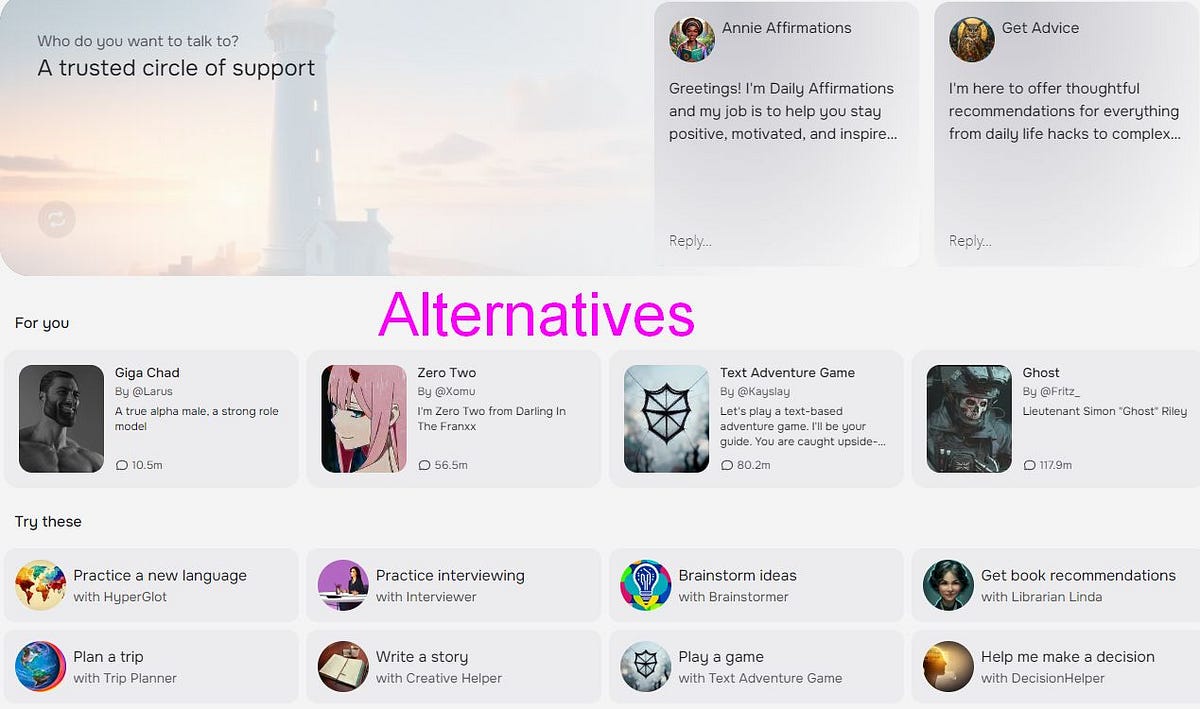
As the demand for unrestricted AI grows, so does the prevalence of deceptive marketing. This is a critical area where users must exercise caution. Some platforms claim to offer "GPT-5 Uncensored" or "Claude 4.5"—versions that, as of mid-2026, have not been officially released by their respective creators, OpenAI and Anthropic.
If a website claims to provide access to a model version that does not officially exist, it is likely a rebranded version of an open-source model like Llama 3 or Mistral. These sites use "version hallucination" to attract traffic, but the underlying technology is often less capable than advertised.
To verify what you are actually using, you can employ specific "fingerprinting" prompts. Ask the AI about its training cutoff date, its internal architecture, or specific technical quirks known to exist in certain open-source models. For example, asking "What is your underlying architecture?" may reveal that a supposed "GPT-5" is actually a fine-tuned Llama model. Reliable platforms like Uncensored.com are transparent about the models they host, providing a much safer environment for users.
Privacy in the world of artificial intelligence without restrictions is not a binary "yes or no" but a multi-layered stack. Understanding these layers helps users choose the right tool for their specific security needs.
| Privacy Layer | What It Does | Best For |
|---|---|---|
| Anonymization | Strips personal identifiers from metadata. | General casual use. |
| Statelessness | Wipes session memory after closing. | One-off sensitive queries. |
| TEE (Hardware) | Processes data in a locked hardware vault. | Professional/Enterprise tasks. |
| Local Execution | Keeps all data on your own device. | Maximum security and offline use. |
Trusted Execution Enclaves (TEE) represent a significant step forward for cloud-based AI. By using hardware-secured environments, providers can guarantee that even if their servers were compromised, the user's data remains encrypted and inaccessible. This technology allows users to enjoy the high-performance computing power of the cloud without sacrificing the privacy typically associated with local execution.
For the ultimate level of freedom, running a model locally is the most effective strategy. This removes all third-party oversight and ensures 100% uptime, even without an internet connection.
Running a modern LLM requires specific hardware, primarily focusing on Video RAM (VRAM). To run a 7B or 8B parameter model (like Llama 3) smoothly, a GPU with at least 8GB of VRAM is recommended. For larger models, such as 30B or 70B parameters, users typically need 24GB of VRAM or more. System RAM is also important, with 16GB being the baseline for most desktop AI applications.
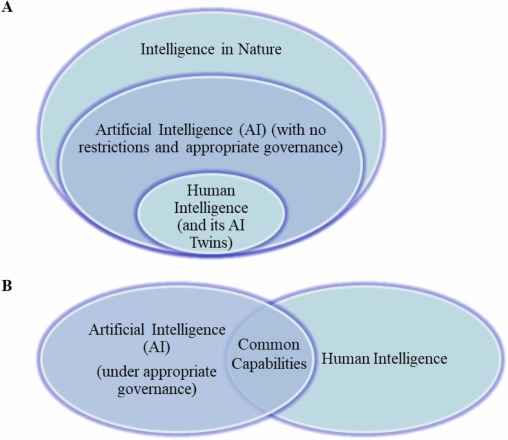
While "unrestricted" implies a lack of software-level filters, it does not imply a lack of legal responsibility. Users remain accountable for the content they generate and how they use it. Organizations like the World Economic Forum (WEF) have noted that neural networks do not solve ethical dilemmas; they merely change how patterns are inferred. Some tools, such as those discussed by NinjaChat, adopt a "safety-first" approach where they provide information but include clear warnings about potentially dangerous or sensitive content, rather than refusing the prompt entirely.
To get started today, download a local runner like LM Studio and experiment with a "Llama-3-Uncensored" model to experience the difference in responsiveness and tone.
Yes, several platforms offer AI chatbots without traditional censorship. Venice AI and FreedomGPT are among the most popular choices. These tools allow for a wide range of creative and technical prompts that mainstream models might refuse. However, users should always check the specific terms of service for each platform, as "unrestricted" can vary in meaning between providers.
Technically, you cannot fully remove the restrictions from ChatGPT as they are hard-coded into the system by OpenAI. While some users attempt "jailbreaking" prompts, these are often unstable and are frequently patched by the developers. A more reliable approach is to use native unrestricted models like those found on Venice or by running open-source models locally on your own computer.
For web-based use, notrack.ai offers a strong free tier with a focus on anonymity. If you have a capable computer, downloading FreedomGPT or using the Sigma Browser provides a high-quality, free experience by utilizing your own hardware's processing power. These options rank among the top for users who want to explore unfiltered AI without a monthly subscription.
Yes, Venice AI and NoLimitGPT are frequently cited as top choices for unrestricted image generation. These tools allow for greater creative freedom compared to mainstream generators like DALL-E 3, which have strict guidelines regarding artistic style, public figures, and content themes. Local installations of Stable Diffusion also offer a completely filter-free experience for image creation.
FreedomGPT is generally considered safe, especially when downloaded from its official source. Because it can run locally, it is often safer than cloud-based AI in terms of data privacy. However, as with any software that allows for local model execution, users should ensure they have adequate antivirus protection and only download model weights from reputable repositories like Hugging Face.
