How to Use Top Research AI Tools to Streamline Your Literature Review
The landscape of academic research has shifted dramatically. Relying on traditional keyword searches through university library portals often results in hundreds of irrelevant PDFs, while using general generative models like ChatGPT frequently leads to fabricated citations and methodological inaccuracies. As of 2026, the academic community has largely transitioned toward specialized, grounded artificial intelligence engines designed specifically for scholarly workflows.
These specialized platforms do not merely generate text; they query massive, vetted databases of peer-reviewed literature, extract specific data points, and map citation networks. By integrating these platforms into a cohesive workflow, researchers can significantly reduce the time spent on manual literature reviews while maintaining rigorous academic standards.
If you need to start researching immediately, these three platforms rank among the top choices for academic workflows:
- Elicit: Highly regarded for extracting specific data points (e.g., sample sizes, p-values) from multiple PDFs into a structured table.
- Scite: A top-tier option for verifying claims by showing exactly how a paper has been cited (supporting vs. contrasting evidence).
- Consensus: An excellent tool for quickly synthesizing a "Yes/No" consensus across thousands of scientific papers based on a specific hypothesis.
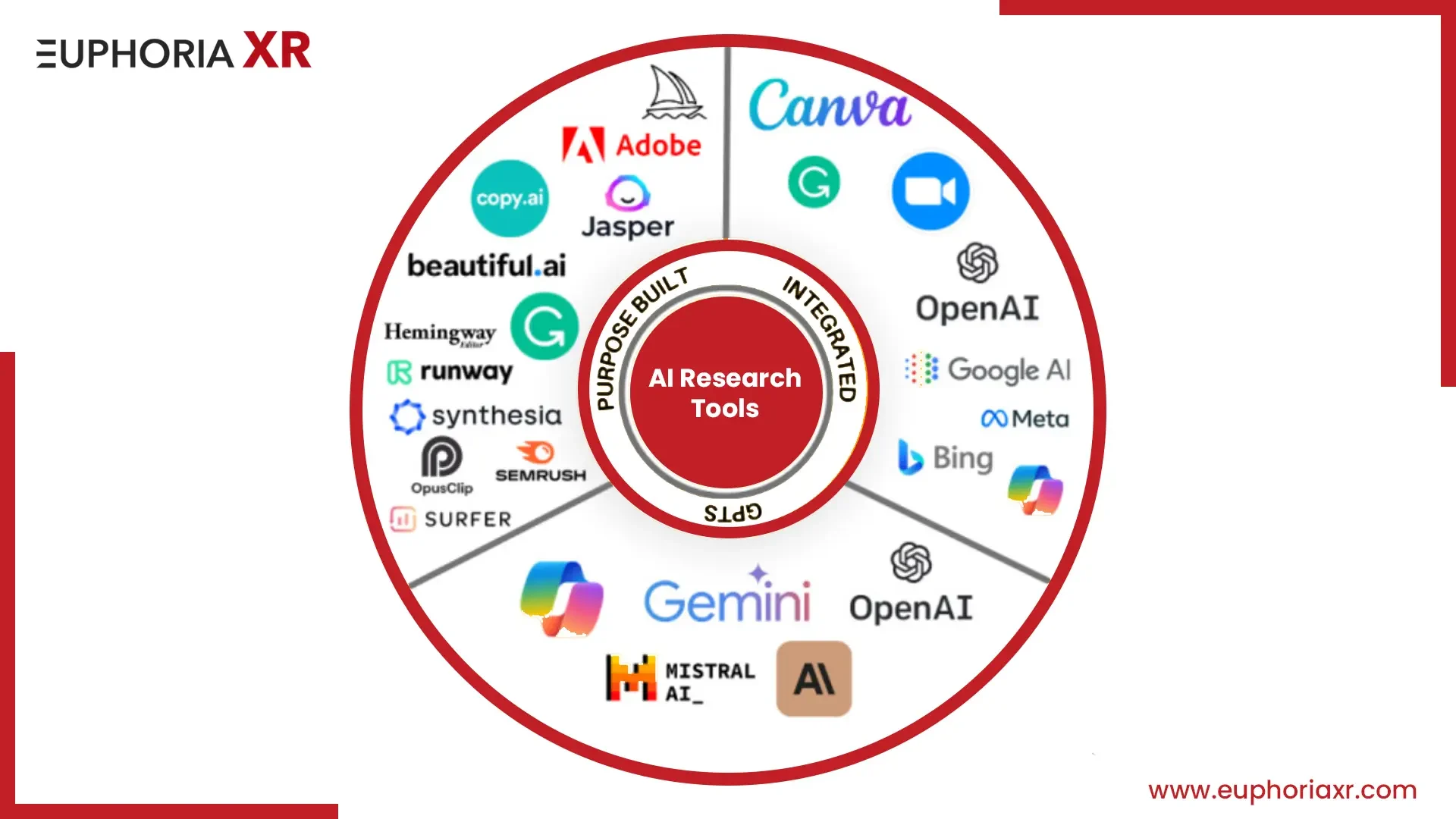
Image source: Euphoria XR
Why Should You Move Beyond ChatGPT for Academic Research?
The primary reason academic institutions caution against using general Large Language Models (LLMs) for literature reviews is the persistent issue of hallucination. When a user asks a standard generative model to summarize the literature on a niche topic, the model predicts the most statistically likely sequence of words. Because academic citations follow highly predictable formatting patterns, the model can easily generate a plausible-looking citation—complete with authors, a journal name, and a DOI—that does not actually exist.
To solve this, specialized research platforms utilize a framework known as Retrieval-Augmented Generation (RAG). According to guidelines from the Purdue University Library, grounded AI tools operate fundamentally differently than conversational bots. When you submit a query to a grounded tool, it first searches a verified database (such as Semantic Scholar or OpenAlex) to retrieve actual, published papers. It then restricts its language generation strictly to the text found within those retrieved documents.
Furthermore, general LLMs are limited by their training data cutoffs and lack access to paywalled literature. Specialized research engines bypass this limitation by integrating directly with scholarly databases. This ensures that every claim generated by the AI is directly linked to a specific sentence in a peer-reviewed paper, allowing the human researcher to click through and verify the source context immediately.
Which Research AI Tools Rank Among the Top for Finding and Analyzing Papers?
The current ecosystem of academic software is highly fragmented, with different platforms specializing in distinct phases of the research process. Understanding the specific strengths of each platform is crucial for building an efficient workflow.
Elicit for Automated Data Extraction and Summarization
Elicit stands out as a premier tool for researchers who need to conduct systematic reviews or meta-analyses. Rather than simply summarizing a paper's abstract, Elicit excels at tabular data extraction. Users can upload a batch of PDFs or search Elicit's database of over 125 million papers, and then create custom columns for the AI to populate.
For example, a researcher can command Elicit to extract the "participant demographic," "intervention type," "duration of study," and "primary outcome measure" from 50 different clinical trials simultaneously. The platform reads the full text of the PDFs and populates a spreadsheet, providing direct citations for where it found each data point. As of mid-2026, Elicit offers users 5,000 free credits to test the system, with a standard academic subscription priced at $12 per month (billed annually).
Scite for Verifying Claims with Smart Citations
While traditional databases like Web of Science or Google Scholar provide raw citation counts, they do not indicate why a paper was cited. A paper might have 500 citations, but if 400 of those citations are pointing out a methodological flaw, a raw count is highly misleading.
Scite addresses this through its proprietary "Smart Citations" system. By analyzing a database of over 280 million full-text scholarly articles, Scite uses natural language processing to classify every citation as "supporting," "contrasting," or "mentioning." According to resources from the Oklahoma State University Library, Scite has secured direct licensing agreements with over 40 major publishers (including Wiley and SAGE), allowing its AI to read full-text articles that are normally hidden behind paywalls. This makes it an exceptionally strong tool for validating the foundational evidence of your research argument.
Consensus for Synthesizing Scientific Consensus
Consensus is designed for rapid hypothesis testing. If you have a specific, answerable question (e.g., "Does creatine supplementation improve cognitive function in older adults?"), Consensus queries the Semantic Scholar database and aggregates the findings into a "Synthesis Meter."
The platform will analyze the top relevant papers and provide a visual breakdown—for instance, showing that 75% of papers suggest a positive effect, 15% show no effect, and 10% show a negative effect. It then provides a one-paragraph summary of the prevailing scientific consensus, heavily annotated with links to the source papers. This makes it a highly effective starting point for scoping reviews.
| Tool Name | Primary Use Case | Database Scale | Pricing Model (Est. 2026) | Unique Feature |
|---|---|---|---|---|
| Elicit | Data Extraction & Systematic Reviews | 125M+ Papers | Freemium (5k credits) / $12/mo | Custom tabular data extraction from PDFs |
| Scite | Citation Validation & Literature Mapping | 280M+ Full-Text Articles | ~$20/mo (Institutional plans vary) | Smart Citations (Supporting vs. Contrasting) |
| Consensus | Rapid Hypothesis Testing | Semantic Scholar Integration | Freemium / Premium tiers | Visual Synthesis Meter for Yes/No queries |
| Research Rabbit | Visual Discovery & Network Mapping | Semantic Scholar / PubMed | Free (Premium options available) | Force-directed citation network graphs |
| Scholarcy | Document Summarization | User Uploads / Open Access | ~$9.99/mo | Interactive summary flashcards |
How to Build a Complete Research Stack with Multiple AI Tools
Relying on a single platform is a common mistake among early-career researchers. Because no single AI indexes the entire web or possesses every analytical capability, building a multi-tool "Research Stack" is highly recommended. By passing data sequentially from one specialized tool to another, you can create a robust, verifiable literature review pipeline.
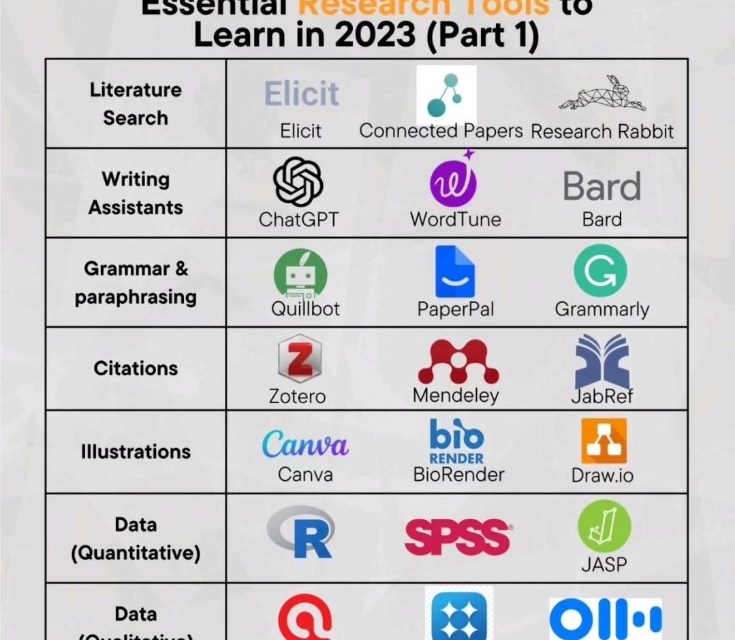
Image source: Opportunities for Youth
Start by identifying 2-3 "seed papers" that are highly relevant to your topic. Input these into Research Rabbit. The platform will generate a visual, force-directed graph showing all connected literature. This visual mapping is exceptionally strong for finding "hidden" papers that share citations but might not use the exact keywords you would type into a traditional search bar.
Once you have compiled a list of 20-30 potential papers from your discovery phase, run them through Scite. Check the Smart Citation badges for each paper. If a foundational paper in your list has a high number of "contrasting" citations, you must read those critiques to ensure you aren't building your argument on debunked methodology.
Download the validated PDFs and upload them to an Elicit workspace. Set up your extraction columns based on your research variables (e.g., methodology, sample size, limitations). Export the resulting table as a CSV file to serve as the backbone of your literature review matrix.
Upload your curated PDFs and your Elicit CSV into Google's NotebookLM. Because NotebookLM restricts its knowledge base entirely to the documents you upload, you can safely prompt it to "draft a thematic summary of the methodologies used across these 30 papers" without fear of external hallucination.
What Are the Top Free AI Tools for Researchers on a Budget?
While premium subscriptions offer the most robust features, many researchers and graduate students operate under strict budget constraints. Fortunately, several highly capable tools offer generous free tiers or are entirely free to use.
Research Rabbit remains a popular choice for visual discovery because its core mapping features are currently available at no cost. It integrates seamlessly with Zotero, allowing you to sync your visual maps directly to your reference manager without a premium subscription.
Google NotebookLM is entirely free and serves as a powerful synthesis engine. Because it relies on the user to provide the source documents (up to 50 PDFs per notebook), Google does not have to pay for database licensing, allowing them to offer the tool at no cost. It is an excellent choice for chatting with your own curated library.
For general academic queries, the free tier of Perplexity is widely considered a strong alternative to standard search engines. By using its "Academic" focus mode, Perplexity restricts its web search to published papers and provides inline citations for every claim it generates, making it a safer option than a standard ChatGPT prompt.
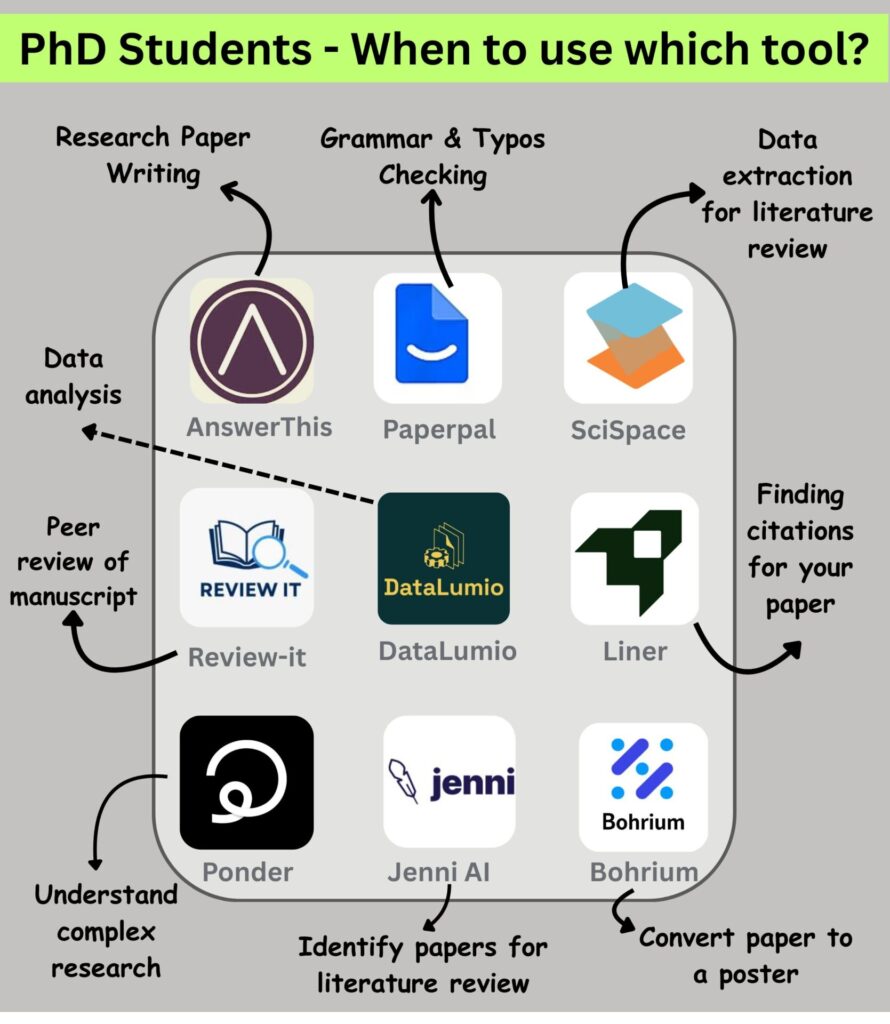
Image source: Smart Researcher
How to Avoid the AI Dependency Trap Using the AI Duck Method
A growing concern within academic circles is the "dependency trap"—a scenario where junior researchers rely so heavily on AI for summarization that they fail to develop their own critical reading and analytical skills. To combat this, many educators advocate for the "AI Duck" method, inspired by the rubber duck debugging technique used in computer science (famously implemented as the CS50 Duck at Harvard).
Instead of using AI passively to generate content (e.g., "Summarize this paper for me"), the AI Duck method requires active engagement. You treat the AI as a Socratic tutor. After reading a paper yourself, you might prompt the AI with: "I believe the primary flaw in this paper's methodology is the lack of a randomized control group. Act as a peer reviewer and critique my assessment based on the text."
This approach forces the human researcher to generate the initial hypothesis and do the cognitive heavy lifting, using the AI only to sharpen and challenge their thinking. As highlighted in a recent Nature guide on AI in research, artificial intelligence is a powerful hypothesis generator and data organizer, but the burden of proof and critical synthesis must always remain with the human at the lab bench or the writing desk.
What Are the Technical Risks of Using AI in Research?
Beyond the well-known risk of hallucination, researchers must be aware of deeper, systemic technical risks associated with AI-assisted workflows. The most pressing of these is "Model Collapse" and database pollution.
As more researchers use AI to write papers, pre-print servers (like arXiv) and open-access databases are increasingly populated with AI-generated text. When grounded AI tools like Consensus or Elicit query these databases, they may inadvertently retrieve and synthesize AI-generated papers rather than human-conducted research. Over time, training models on synthetic data leads to a degradation in output quality, a phenomenon known as model collapse.
To mitigate this risk, researchers must practice rigorous institutional vetting. Always check the source of the PDF that the AI retrieves. Is it from a reputable, peer-reviewed journal, or is it an unvetted pre-print? Furthermore, researchers should consult their specific university library guidelines. Institutions like Georgetown University frequently update their policies on which AI tools meet academic integrity standards and how their usage must be disclosed in final publications.
Applying Research AI Tools to Patents and Clinical Trials
While these platforms are heavily marketed toward academic literature reviews, their underlying technology is highly applicable to industry research, business intelligence, and medical analysis.
Finding prior art is notoriously difficult due to the dense, legalistic language used in patent filings. Scite is a highly competitive tool in this space because its database includes millions of global patents alongside academic papers. By using Scite's natural language search, R&D teams can input a plain-English description of a proposed invention and find related patents, significantly speeding up the initial phases of intellectual property clearance.
Medical researchers conducting systematic reviews of clinical trials face the daunting task of comparing disparate datasets. Elicit's tabular extraction is uniquely suited for this. A researcher can upload 100 clinical trial PDFs and instruct Elicit to extract the "adverse event rate," "dosage protocol," and "patient attrition rate." This transforms weeks of manual data entry into a process that takes mere minutes, allowing the researcher to focus on statistical analysis rather than data gathering.
Frequently Asked Questions
Final Thoughts: Mastering the AI Research Stack
Transitioning from manual literature searches to an AI-assisted workflow requires a shift in methodology. The goal is not to replace human critical thinking, but to automate the tedious processes of data extraction and citation mapping so you can focus on high-level synthesis.
- Prioritize Grounded AI: Always use tools that link directly to verified databases (like Semantic Scholar) rather than relying on standard conversational chatbots.
- Build a Multi-Tool Stack: Combine Research Rabbit for visual discovery, Scite for evidence validation, and Elicit for granular data extraction.
- Verify Citation Context: Do not rely on raw citation counts; use Scite to ensure the papers you cite are actually supported by subsequent research.
- Use the AI Duck Method: Prompt the AI to critique your arguments and act as a Socratic tutor to avoid falling into the dependency trap.
- Watch for Synthetic Data: Always verify the source journal of retrieved PDFs to ensure you are not basing your review on AI-generated pre-prints.
- Check Institutional Policies: Review your university library's specific guidelines regarding AI usage and disclosure before submitting any manuscript.