Top AI Search Optimization Platforms for Data Accuracy in 2025 Ranked and Reviewed
As of late 2025, the transition from the "Link Economy" to the "Answer Economy" is complete. Brands now prioritize Generative Engine Optimization (GEO) to ensure factual accuracy across LLMs like ChatGPT, Perplexity, and Gemini. Key findings indicate that AI-referred traffic converts at 14.2%, significantly higher than traditional search's 2.8%. To maintain visibility, platforms like Profound and Yotpo Discover have emerged as top-tier choices for monitoring citation volatility and executing autonomous technical fixes.
The digital landscape has undergone a fundamental shift. We are no longer merely optimizing for a list of blue links; we are optimizing for the synthesized answers that appear at the very top of search results. This new paradigm, often called Answer Engine Optimization (AEO), places a premium on data accuracy. When an AI hallucination misrepresents your brand's pricing, features, or reputation, the impact on the bottom line is immediate and measurable.
According to industry estimates, nearly $750 billion in US revenue is projected to flow through AI-powered search interfaces by 2028. For businesses, this means that appearing in an AI summary is not just a "nice-to-have" metric—it is a critical revenue driver. However, the challenge lies in the inherent instability of these models. Research shows that citation patterns are highly volatile, with 40% to 60% of cited domains changing month-to-month for the same queries.
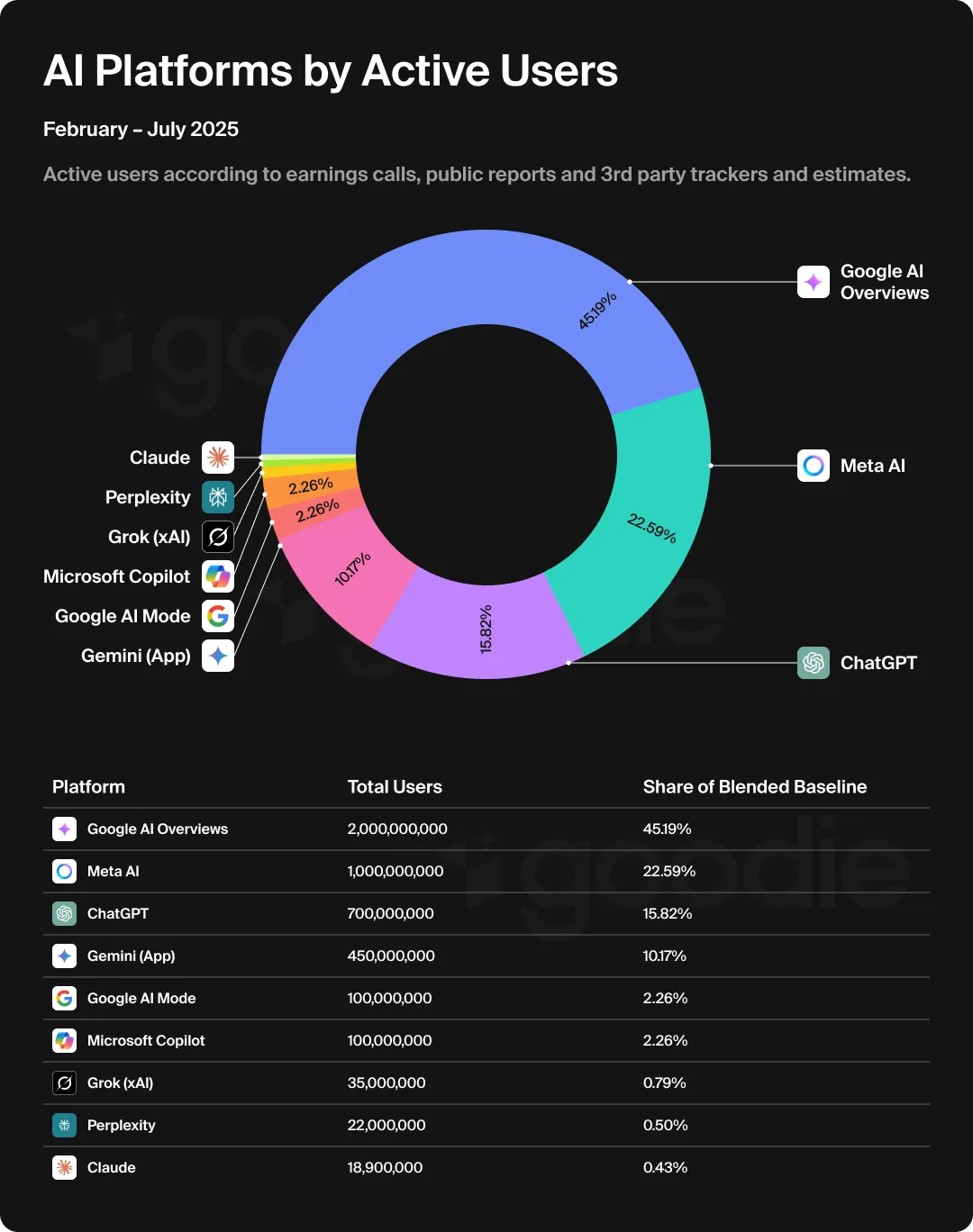
Image source: Goodie AI
Why Data Accuracy is the New Currency in the AI Answer Economy
In the traditional search era, a brand could survive with slightly outdated information on third-party sites as long as their main website was correct. In the AI Answer Economy, large language models (LLMs) scrape data from across the web to build a "consensus" view of your brand. If the consensus is based on inaccurate data, the AI will confidently present those errors as facts to potential customers.
The stakes are remarkably high. Brands that fail to manage their AI presence risk a 20% to 50% decline in traditional organic traffic as users migrate toward platforms like Perplexity and ChatGPT for their primary information needs. Conversely, those who successfully optimize for these engines see a massive boost in lead quality. As noted by Yotpo's analysis of e-commerce trends, AI-referred traffic often demonstrates a conversion rate of 14.2%, nearly five times the average of traditional search engines.
This conversion superiority stems from the high intent of conversational search. When a user asks an AI for a specific recommendation, they are typically further down the purchase funnel than someone performing a broad keyword search. Ensuring your brand is the "Source of Truth" in these moments requires a sophisticated blend of technical SEO, structured data, and active reputation monitoring.
How to Choose the Right AI Search Optimization Platform for Your Brand
Selecting a platform for AI search optimization requires moving beyond simple keyword tracking. You need a tool that understands the "Agentic" nature of modern search—where AI agents are both the crawlers and the synthesizers of information. When evaluating platforms, consider the following decision framework:
- Monitoring vs. Execution: Does the tool simply alert you to inaccuracies, or can it autonomously suggest or implement fixes?
- Citation Accuracy Rate: Look for platforms that benchmark against Perplexity’s 95% source citation rate to ensure you are tracking the most reliable data.
- Multilingual Capabilities: For global brands, the "accuracy gap" in non-English markets is a significant risk. Ensure the platform supports diverse locales.
- Real-time Alerting: AI models update their weights and training data frequently. You need a platform that detects hallucinations the moment they appear.
Comparison Matrix: Top AI Search Optimization Platforms
| Platform Name | Primary Strength | Accuracy Monitoring | Autonomous Execution | Best For |
|---|---|---|---|---|
| Profound | Cross-Model Verification | Real-time / Multi-LLM | No | Enterprise Visibility |
| Yotpo Discover | Agentic SEO Workflow | High | Yes | E-commerce Brands |
| AthenaHQ | Technical Schema Audit | Moderate | Partial | SaaS Companies |
| Evertune | Hallucination Correction | Consumer-Panel Based | Yes | Reputation Management |
| Better-i18n | Global Data Accuracy | Multilingual | No | International Firms |
Best AI Search Optimization Platforms for Data Accuracy and Monitoring
Profound for Cross-Model Citation Verification
Profound stands out as a top choice for brands that need to understand the "Citation Gap." Their data indicates an 89% difference in citations between models like ChatGPT and Google Gemini for the same query. By providing a unified dashboard that tracks visibility across all major LLMs, Profound allows marketers to identify which specific models are misrepresenting their data.
Yotpo Discover for Autonomous Agentic SEO
Yotpo Discover represents a significant advancement in "Agentic SEO." Instead of just providing reports, it utilizes "Onsite Agents" to automatically identify and suggest technical architecture fixes. Furthermore, its "Activation Agents" help mobilize real reviewers on influential platforms like Reddit, which AI engines heavily weight when generating brand summaries.
Evertune for Correcting Brand Hallucinations via Consumer Panels
One of the most difficult aspects of AI search is the "black box" nature of how models reach conclusions. Evertune addresses this by utilizing a 25-million-person consumer panel to identify brand inaccuracies in the wild. This human-in-the-loop approach ensures that even subtle hallucinations—such as an AI misinterpreting a brand's tone or values—are caught and corrected through targeted content injection strategies.
Better-i18n for Maintaining Global Data Accuracy
For companies operating in multiple countries, maintaining data accuracy is a complex hurdle. Better-i18n focuses on the high-ROI lever of multilingual AI search. It ensures that brand facts remain consistent across different languages, preventing the common issue where a brand is represented accurately in English but suffers from significant hallucinations in Spanish, German, or Japanese results.
Image source: Data-Mania
How to Fix Inaccurate Brand Information in AI Search Results
If you discover that an AI engine is hallucinating information about your business, you must act quickly to correct the "Source of Truth." Unlike traditional SEO, where you might wait weeks for a crawl, AI models can be influenced through a multi-step mobilization strategy.
- Identify the Source of the Hallucination: Use tools like Profound to determine if the error is coming from an outdated press release, a misinterpreted Reddit thread, or a lack of structured data on your own site.
- Implement Technical Suppression: If an AI is pulling data from a page you don't want it to use, utilize "nosnippet" and "data-nosnippet" tags. According to Google Search Central, these tags are the primary way site owners can control what generative engines display.
- Update the "Source of Truth": Ensure your website's Schema markup is comprehensive and error-free. AI engines prioritize machine-readable JSON-LD over standard HTML text when resolving factual conflicts.
- Mobilize Social Proof: AI models frequently cite community-driven platforms. If an error persists, gaining fresh, accurate citations on high-authority sites like Reddit or Quora can help "overwrite" the model's previous understanding.
Technical Requirements to Make Your Site AI-Ready
To be successfully indexed and cited by generative engines, your website must meet a higher technical standard than what was required for traditional search. AI crawlers are looking for high-density information that can be parsed quickly and reliably.
The Need for Speed and Structure
Loading times are more critical than ever. For an AI to synthesize your content in real-time, it needs to access your data in 0.3 to 0.6 seconds. Any delay in server response can result in the AI skipping your site in favor of a faster competitor. Furthermore, you must move beyond human-readable text. Implementing deep Schema markup for products, FAQs, and organizations is mandatory for inclusion in AI Overviews.
Consider the following comparison of standard HTML versus AI-optimized JSON-LD:
<h1>SuperWidget 3000</h1>
<p>Price: $99.99</p>
<p>In stock and ready to ship!</p>
{
  "@context": "https://schema.org/",
  "@type": "Product",
  "name": "SuperWidget 3000",
  "offers": {
    "@type": "Offer",
    "price": "99.99",
    "availability": "https://schema.org/InStock"
  }
}
The Future of Generative Engine Optimization (GEO) in 2026
As we look toward 2026, the distinction between SEO and GEO will continue to blur. However, the core difference remains: SEO focuses on ranking a link, while GEO focuses on appearing in a synthesized response. The rise of personalization means that "accuracy" will become a moving target, as AI search engines tailor answers based on individual user history and preferences.
Dan Shaffer, a prominent researcher in the field, warns that brands failing to adopt these platforms now will face a 12- to 18-month competitive gap that may be impossible to close. The early adopters are already securing the "prime real estate" in AI summaries, establishing themselves as the definitive authorities in their respective niches.
In recent months, we have seen the emergence of "Multi-Modal GEO," where brands must optimize not just for text, but for how AI models interpret their images and videos. Ensuring that your visual assets have descriptive, data-rich metadata is the next frontier in maintaining brand accuracy across the generative web.
Frequently Asked Questions
- What is the difference between SEO and Generative Engine Optimization (GEO)?
- Traditional SEO focuses on optimizing content to rank as a link in a list of search results. GEO, or Generative Engine Optimization, focuses on ensuring your brand's information is included and accurately represented within the synthesized answers generated by AI models like ChatGPT, Gemini, and Perplexity.
- How do I track my brand's accuracy across different AI search engines?
- It is highly recommended to use specialized platforms like Profound or Evertune. These tools monitor multiple LLMs simultaneously, alerting you to citation volatility and hallucinations. Because different models use different training data, your brand may appear accurately in one engine but not in another.
- Can I force ChatGPT or Perplexity to update their information about my business?
- You cannot directly "force" an update because these models rely on their training data and real-time web crawling. However, you can influence them by updating your site's Schema markup, publishing fresh "Source of Truth" content, and ensuring your brand is cited correctly on high-authority platforms like Reddit and industry-specific journals.
- Which AI search engine is currently considered the most accurate?
- As of 2025, Perplexity is widely regarded for its 95% source citation rate, making it a top choice for users seeking factual reliability. ChatGPT-4 also maintains high factual accuracy (85%+), though it sometimes struggles with real-time data unless connected to its browsing tools.
- Does traditional SEO still matter for AI search?
- Yes, traditional SEO foundations like E-E-A-T (Experience, Expertise, Authoritativeness, Trust) and technical site health are still vital. Google’s AI Overviews, for example, rely heavily on the same signals that drive traditional rankings. A technically sound, authoritative site is more likely to be cited by an AI engine.
The Bottom Line: Key Takeaways for 2025
- AI search converts 5x better than traditional search, making GEO a high-priority revenue channel.
- Citations are highly volatile; monitoring your brand across multiple models is essential to prevent reputation damage.
- Data accuracy is a technical effort that requires fast loading times (under 0.6s) and robust Schema markup.
- Agentic SEO tools like Yotpo Discover are moving beyond monitoring to provide autonomous execution of fixes.
- Social proof matters; AI engines heavily weight community platforms like Reddit when synthesizing brand summaries.
- Hallucination correction requires a "Source of Truth" strategy combined with technical suppression of inaccurate pages.
Start by auditing your site's Schema markup today to ensure AI engines have a clear, machine-readable path to your brand's most important facts.