Which AI Models Have the Largest Context Windows in 2026?
The State of Long Context AI Models in Mid-2026
The AI landscape of 2026 has moved past the era where a 128k token window was considered high-end. Today, we are witnessing the "10M Token Frontier," a shift driven by massive infrastructure investments and new architectural breakthroughs. According to recent data from Elvex, the ability to process entire libraries or massive codebases in a single prompt has become a standard requirement for enterprise-grade agents.
In mid-2026, the industry has bifurcated into two primary categories. First, there are the "Frontier Giants" like Google and Meta, which are pushing the boundaries of raw token counts to 10 million and beyond. Second, there are the "Efficiency Specialists" like Anthropic and DeepSeek, which focus on 1-million-token windows but prioritize reasoning density and "working memory" reliability. Anthropic, in particular, has redefined the context window not just as a storage bin, but as active working memory that allows a model to synthesize complex relationships across vast datasets.
This expansion is not merely about size; it is about the transition from Retrieval-Augmented Generation (RAG) to "Long-Context Native" workflows. While RAG remains a vital tool for cost management, the 2026 generation of models allows for a level of holistic understanding that previous chunking methods could not achieve. We are now seeing models that can maintain a coherent narrative or technical logic across 7.5 million words—the equivalent of roughly 15 copies of the entire Harry Potter series.
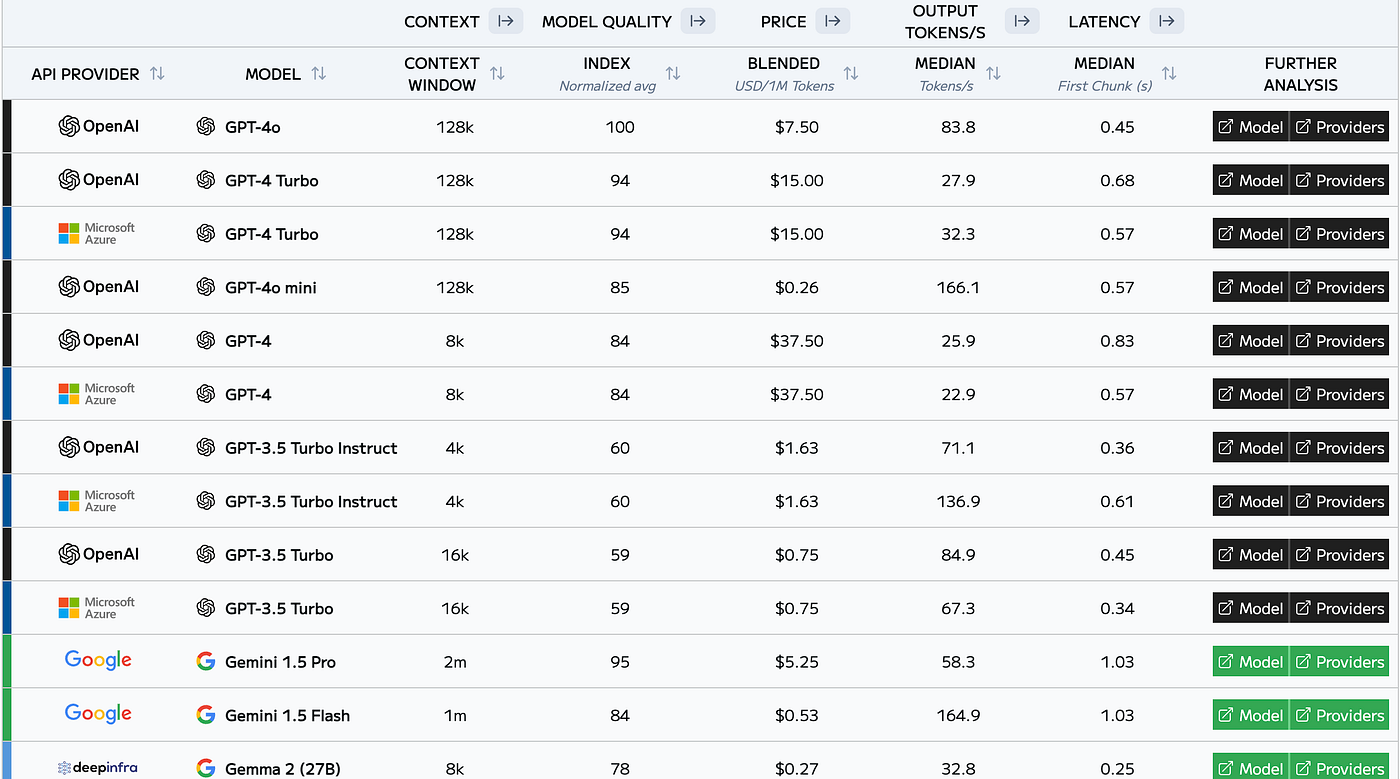
Image source: Medium
Comparing the Top Long Context AI Models of 2026
Choosing a model in 2026 requires looking beyond the headline number. While a 10-million-token window sounds impressive, the "effective" window—the point at which the model can still accurately retrieve and reason about information—is often much lower. The following table breaks down the current leaders based on advertised limits, effective performance, and the often-overlooked output cap.
| Model Name | Advertised Window | Effective Window (60% Rule) | Output Cap | Price (per 1M Tokens) |
|---|---|---|---|---|
| Gemini 3 Pro | 10,000,000 | ~6,000,000 | 65,536 | $12.00 |
| Llama 4 Scout | 10,000,000 | ~6,500,000 | 128,000 | Self-hosted |
| DeepSeek V4 Pro | 1,000,000 | ~850,000 | 384,000 | $0.14 (Flash) |
| Claude Fable 5 | 1,000,000 | ~920,000 | 128,000 | $10.00 |
| GPT-5.6 Sol | 1,000,000 | ~780,000 | 128,000 | Varies |
How Gemini 3 Pro and Llama 4 Scout Hit 10 Million Tokens
The jump to 10 million tokens was achieved through two different technical paths. Google’s Gemini 3 Pro utilizes a highly optimized Ring Attention mechanism combined with specialized TPU v6 clusters. This allows the model to distribute the computational load of the self-attention mechanism across thousands of chips, effectively bypassing the quadratic scaling laws that limited earlier models. According to BenchLM, Gemini 3 Pro remains a top choice for massive multi-modal inputs, such as analyzing hours of 4K video or thousands of high-resolution medical images.
Meta’s Llama 4 Scout, on the other hand, relies on a Mixture-of-Experts (MoE) architecture that has been specifically tuned for long-context retrieval. By only activating a fraction of its parameters for any given token, Llama 4 Scout can maintain a processing speed of 2,600 tokens per second even at the 5-million-token mark. This makes it one of the fastest long-context models currently available for local or private cloud deployment.
Why DeepSeek V4 Pro Is a Strong Contender for Agents
While it does not claim the 10-million-token crown, DeepSeek V4 Pro has become a favorite for developers building autonomous agents. The reason lies in its massive 384,000-token output cap. Most models, including Gemini 3 Pro, have relatively small output limits (often 64k or 128k). If you ask an AI to refactor a massive codebase, it might be able to read the whole thing, but it won't be able to write the updated version in a single turn if the output cap is too small. DeepSeek’s ability to generate nearly 300,000 words in a single response makes it a top-tier option for large-scale content generation and software engineering.
The Performance of Open-Weight Models on Specialized Hardware
2026 has also seen the rise of high-performing open-weight models that rival proprietary systems. LongCat-2.0, a 1.6-trillion parameter MoE model, offers a 1-million-token window and has shown remarkable stability in long-form reasoning. Interestingly, we are seeing a trend toward hardware-specific optimization. For instance, openPangu-2.0-Flash is specifically designed to run on Huawei Ascend chips, providing a 512k window with latency that few competitors match on that specific hardware stack.
The Truth About Advertised vs Effective Context Windows
In the AI industry, there is a growing gap between what a model can hold in its memory and what it can actually use. This is often referred to as the "Context Cliff." Research from WhatLLM suggests that most models begin to experience a significant performance degradation once the input exceeds 60% to 70% of the advertised limit.
When architecting systems for 2026 models, always plan for an "effective" window that is 60% of the advertised maximum. If a model claims 1 million tokens, treat 600,000 as your safe working limit to avoid the "Lost in the Middle" phenomenon where the model ignores data placed in the center of the prompt.
Why Does Performance Drop After 60 Percent Capacity?
The "Context Cliff" occurs because of how attention mechanisms distribute weights. As the number of tokens increases, the "signal-to-noise" ratio decreases. Even with advancements like FlashAttention-3, the model's ability to distinguish a specific fact from a sea of millions of other tokens becomes strained. In testing, models at 90% capacity often hallucinate details or fail to follow complex instructions that were clearly stated at the beginning of the prompt. This is why many developers still prefer using RAG for data that doesn't need to be "in-memory" all at once.
What Is the VELC-Bench and Why Does It Matter?
In 2026, the "Needle in a Haystack" test—where a model is asked to find one specific fact in a long text—is considered too easy. The new gold standard is the VELC-Bench (Verification on Long Context Benchmark). This benchmark tests a model's ability to not just find information, but to reason about it and verify its truthfulness across the entire window.
According to Aimultiple, Claude Fable 5 currently holds a high standard on this benchmark. It demonstrates a unique asymmetry: it scores roughly 90% on "Verify YES" tasks (confirming a fact is present) but a remarkable 94% on "Verify NO" tasks (correctly identifying when a fact is missing or contradicted). This makes it a highly reliable choice for legal and compliance work where "false positives" can be catastrophic.
The Output Cap Trap and Other Hidden Bottlenecks
One of the most common frustrations for AI users in 2026 is the "Output Cap Trap." You might provide a model with a 10-million-token input, but if the model can only output 65,536 tokens, it cannot perform tasks that require long-form synthesis. For example, if you provide a 5-million-token legal discovery file and ask for a detailed 100-page summary, a model with a small output cap will simply cut off mid-sentence or provide a much shorter summary than requested.
Why Your Coding Agent Might Fail Despite a Large Input Window
Coding agents are particularly susceptible to this bottleneck. A modern enterprise codebase can easily exceed 500,000 tokens. While Gemini 3 Pro can read the entire codebase, its 64k output limit means it can only suggest small modular changes. If you need the agent to rewrite five major architectural files simultaneously, it will hit the output ceiling. In contrast, DeepSeek V4 Pro’s 384k output cap allows it to generate entire sub-systems in a single pass, making it a top choice for automated software migration and refactoring.
How Tokenizer Inflation Increases Your Costs
Not all tokens are created equal. In 2026, Anthropic introduced a new tokenizer for the Claude Fable 5 line that is significantly more "granular." While this allows for better handling of non-English languages and technical jargon, it also results in 35% more tokens for the same English text compared to the 2025 versions. This means that a document that was 700,000 tokens last year might now be 945,000 tokens, potentially pushing you over your budget or into the "Context Cliff" zone without you changing a single word of your input.
Cost Analysis of Processing Millions of Tokens
The cost of filling a large context window has seen a massive divergence in 2026. We are currently seeing a 71x price spread between the most affordable and the most expensive models. For high-volume processing, this difference can mean thousands of dollars in monthly savings.
Comparing the 71x Price Spread Between Top Models
DeepSeek V4 Flash has set a new floor for the industry, charging just $0.14 per 1 million tokens. At this price, filling a 1-million-token window costs less than a cup of coffee. On the other end of the spectrum, Claude Fable 5 costs $10.00 per 1 million tokens. While Claude offers superior reasoning and "Verify NO" accuracy, the cost difference is staggering for businesses processing terabytes of data daily.
When Should You Use Long Context vs RAG?
Despite the expansion of context windows, RAG is not dead. The decision framework for 2026 usually comes down to a cost-benefit analysis. According to Zylos, you should use long context when the relationship between distant parts of the data is critical—such as in creative writing, complex legal analysis, or codebase refactoring. You should stick to RAG when you are dealing with a "lookup" task where the model only needs to see a few specific paragraphs to answer a question. This hybrid approach remains a popular choice for balancing performance and budget.
Technical Innovations Driving Context Expansion
The leap to 10 million tokens was not just about adding more GPUs; it required a fundamental rethinking of how AI "attends" to information. Two technologies have been particularly impactful: FlashAttention-3 and TTT-E2E.
How FlashAttention-3 and TTT-E2E Changed the Game
FlashAttention-3 has optimized the memory access patterns of GPUs to such an extent that it can achieve 1.3 PFLOPs/s on an H100. This reduces the time it takes for a model to "read" a 2-million-token prompt from minutes to seconds. Furthermore, the introduction of TTT-E2E (Test-Time Training End-to-End) has allowed models to "learn" from the context window during the inference process itself. This has resulted in a 35x speedup for context windows exceeding 2 million tokens, making real-time interaction with massive datasets a reality.
The Mystery of the 100 Million Token Model
There is persistent talk in the industry about Magic.dev’s LTM-2-Mini, which theoretically supports a 100 million token limit. This would allow a model to hold roughly 75,000 novels in its active memory. While this remains a "theoretical" leader with limited public access as of late 2026, it points to a future where the concept of a "context window" might disappear entirely, replaced by models with infinite, persistent working memory.
Frequently Asked Questions
Key Takeaways for Choosing a Long Context Model
- Don't trust advertised limits: Always plan your architecture around 60% of the maximum capacity to ensure reliable retrieval.
- Prioritize output caps for agents: If you are building coding or writing agents, DeepSeek V4 Pro’s 384k output cap offers a significant advantage.
- Account for tokenizer inflation: Be aware that Claude Fable 5 may consume 35% more tokens for the same text compared to older models.
- Use Gemini for multi-modal tasks: Gemini 3 Pro remains a top-tier choice for processing massive video and image datasets.
- Leverage Llama 4 for speed: For local deployments requiring high throughput, Llama 4 Scout’s 2,600 tokens/sec is exceptionally strong.
- Balance with RAG: For simple lookup tasks, Retrieval-Augmented Generation is still more cost-effective than filling a multi-million token window.
To get started, test your most complex dataset against the VELC-Bench standards to determine which model maintains the highest reasoning accuracy for your specific use case.