Which Open Source AI Models Rank Among the Top Choices in 2025?
As of late 2025, the landscape of open-weight AI has shifted significantly toward high-reasoning models and long-context specialists. DeepSeek-R1 stands out as a top choice for complex reasoning, while GLM 5.2 and Kimi K3 lead in repository-scale coding tasks. For those seeking unrestricted commercial use, Qwen3 Coder remains a highly recommended option due to its Apache 2.0 licensing.
The year 2025 has been described by many industry analysts as the "Sputnik moment" for open-source artificial intelligence. In recent months, the gap between proprietary models like GPT-4o and their open-weight counterparts has narrowed to the point of functional parity in many specialized domains. According to the World Economic Forum, the release of DeepSeek-R1 early in the year proved that open models could match the reasoning and mathematical capabilities of the most advanced closed systems.
This shift is not merely about performance; it represents a fundamental change in how organizations approach AI deployment. We are seeing a transition from US-centric dominance toward a diverse global ecosystem, with labs like Zhipu AI, Moonshot AI, and Alibaba Cloud contributing some of the most capable architectures available today. For developers and enterprises, the question is no longer whether to use open source, but which specific model fits their hardware and operational requirements.
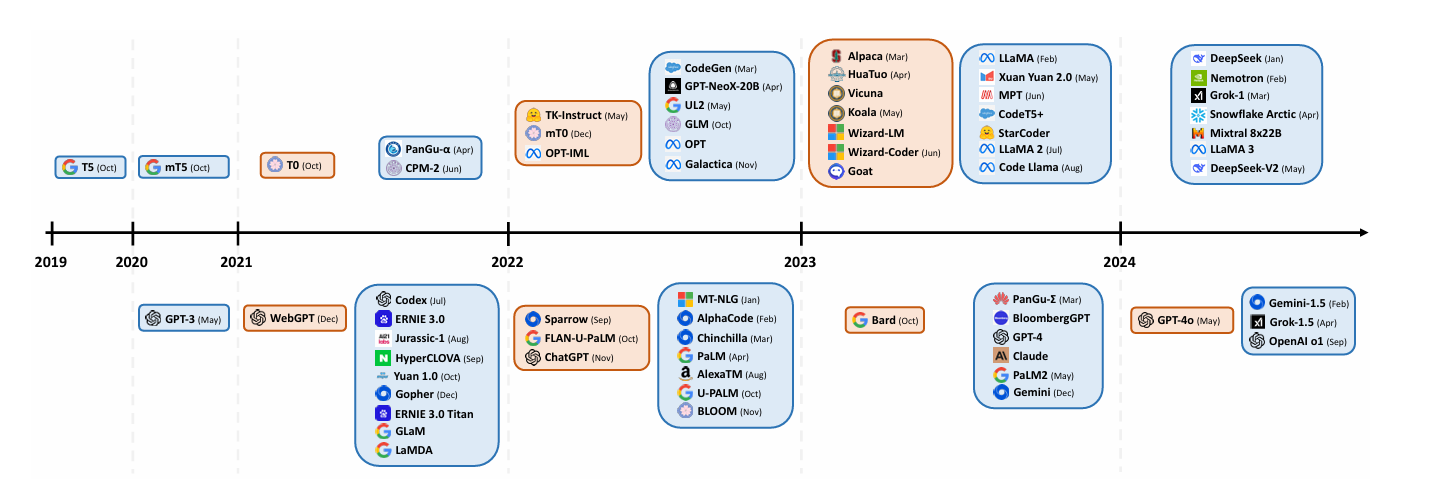
Image source: n8n Blog
Why 2025 Marked a Significant Shift for Open Weight AI
The primary driver of progress in 2025 has been the refinement of "Chain of Thought" (CoT) reasoning. Unlike previous generations that focused primarily on predicting the next token, modern models like DeepSeek-R1 are trained to "think" before they respond, exploring multiple paths to a solution. This architectural shift has made open-weight models exceptionally strong in fields like software engineering, legal analysis, and scientific research.
Efficiency has also taken center stage. The rise of Mixture-of-Experts (MoE) designs, such as those found in the Kimi K2 series, allows for massive parameter counts—sometimes exceeding one trillion—while only activating a fraction of those parameters during inference. As noted by Red Hat's 2026 analysis, this approach enables high-performance models to run on significantly less hardware than previously thought possible, democratizing access to high-tier intelligence.
Furthermore, the transition from simple chatbots to "agentic reasoning" has redefined the utility of these models. In 2025, a model is judged not just by its chat interface, but by its ability to use tools, browse the web, and execute code autonomously. This agentic capability is now a standard feature in the leading open-weight releases, allowing for more complex workflows that were once the exclusive domain of expensive API-based services.
Which AI Model Should You Run Based on Your GPU VRAM?
One of the most common challenges for local AI enthusiasts is matching a model to their specific hardware. VRAM (Video RAM) is the primary bottleneck for running Large Language Models (LLMs) locally. Below is a mapping of current 2025 models to common GPU configurations.
| VRAM Tier | Recommended Models (2025) | Typical Hardware |
|---|---|---|
| 8GB - 12GB | Llama 3.2 3B, Qwen 2.5 7B, DeepSeek-R1 8B | RTX 4060, RTX 3060, Laptop GPUs |
| 16GB - 24GB | Gemma 3 27B, Qwen3-35B, Mistral Small 4 | RTX 4080, RTX 4090, Mac M2/M3 (16GB+) |
| 48GB | Kimi K2 (4-bit), GLM 5.2 (Quantized) | NVIDIA A6000, Dual RTX 3090/4090 |
| 80GB+ | DeepSeek-R1 (Full 671B), Llama 4 405B | NVIDIA H100, A100, Multi-GPU Clusters |
Top models for 8GB to 12GB consumer GPUs
For users with entry-level or mid-range consumer hardware, the focus is on high-efficiency, small-parameter models. Llama 3.2 3B and Qwen 2.5 7B are widely considered among the top options for this tier. These models utilize advanced quantization techniques (such as 4-bit or 6-bit GGUF) to fit within limited memory while maintaining surprising levels of coherence. They are ideal for basic personal assistants, simple text summarization, and local RAG (Retrieval-Augmented Generation) systems.
Top picks for 24GB VRAM and professional workstations
The NVIDIA RTX 4090 remains a popular choice for local development due to its 24GB of VRAM. In this tier, models like Qwen3-35B and Devstral Small 2505 offer a significant step forward in reasoning capabilities. These models are large enough to handle complex instructions and multi-step coding tasks without the severe degradation often seen in 7B models. Many developers find that a 35B model quantized to 4-bits provides a "sweet spot" of speed and intelligence for daily coding assistance.
Enterprise-grade models requiring 48GB VRAM or more
Running the most capable open-weight models, such as the full DeepSeek-R1 (671B) or Kimi K2, requires professional-grade hardware or multi-GPU setups. Organizations often deploy these on NVIDIA A6000s or H100s to achieve the throughput necessary for production environments. These models are designed for high-stakes reasoning, large-scale data analysis, and complex agentic workflows where accuracy is paramount. According to GreenNode, the ability to run these models locally is a major driver for enterprises concerned with data sovereignty and privacy.
Image source: Koyeb
Top Open Source AI Models for Coding and Agentic Workflows
Coding has become the "killer app" for open-source AI. In 2025, we have seen the emergence of models specifically tuned for long-context understanding, allowing them to ingest entire codebases rather than just single files. This capability is essential for building autonomous agents that can navigate complex project structures and fix bugs across multiple modules.
Why GLM 5.2 and Kimi K3 are dominating long-context coding
The breakthrough of the 1-million-token context window has changed the way developers interact with AI. Models like GLM 5.2 and Kimi K3 can now hold an entire repository's worth of information in their active memory. As reported by Kilo.ai, GLM 5.2 achieved a notable score of 62.1% on the SWE-bench Pro benchmark, placing it among the leaders for real-world software engineering tasks. This allows for "repository-scale" coding where the AI can understand how a change in one file might affect a dependency three folders away.
How to use the Model Context Protocol for autonomous agents
The Model Context Protocol (MCP) has emerged as a significant advancement in how LLMs interact with local tools and data. By standardizing the way models connect to file systems, databases, and APIs, MCP enables the creation of highly capable local agents. When combined with a model like Qwen3 Coder, MCP allows a developer to say, "Find all instances of this deprecated function and update them to the new API," and have the agent perform the task safely within a local environment.
"The shift toward agentic workflows means we are moving past simple chat prompts. We are now building systems where the AI acts as a junior developer, capable of navigating the entire stack using standardized protocols like MCP."
Leading Open Source Multimodal Models for Vision and Audio
While text models receive the most attention, the open-source community has made remarkable strides in multimodal capabilities. In 2025, generating and processing images, video, and audio locally has become more accessible than ever.
Generating images and video with Flux and Lumina 2.0
Flux has largely replaced Stable Diffusion as the standard for high-quality open-source image generation. Its ability to follow complex prompts and render text accurately within images makes it a top-tier choice for designers. For video, Lumina 2.0 has introduced a significant improvement in temporal consistency, allowing for the creation of short, high-fidelity clips from text descriptions. These models are typically run via interfaces like ComfyUI, which provides granular control over the generation process.
Processing audio and speech with Whisper and Riffusion
For audio tasks, OpenAI's Whisper remains a highly recommended tool for speech-to-text transcription, with various community-optimized versions offering faster-than-real-time performance on consumer GPUs. On the generation side, models like Riffusion and various Suno-inspired clones allow for the local creation of music and sound effects, providing a powerful toolkit for content creators who wish to avoid the recurring costs and privacy concerns of cloud-based audio services.
Understanding the Legal Difference Between Open Source and Open Weight
It is crucial for users—especially in corporate environments—to understand that not all "open" models are technically "open source." The Open Source Initiative (OSI) has strict definitions that many popular models do not fully meet.
- Open Weight Models
- Models like Llama 4 and Gemma 4 provide the trained weights for download but often include restrictive licenses. These may prohibit use by very large companies or restrict the use of the model's output to train other models.
- Truly Open Source Models
- Models released under licenses like Apache 2.0 or MIT, such as Qwen3 Coder, are more permissive. They allow for unrestricted commercial use, modification, and redistribution, making them a safer choice for many enterprise applications.
The distinction often comes down to the availability of the training data and the specific terms of the license. While Llama 4 is a remarkable achievement in engineering, its "Modified MIT" license means it does not fit the classical definition of open source. For organizations that require absolute legal clarity and freedom, choosing a model with a standard Apache 2.0 license is often the most prudent path.
How to Build a Fully Sovereign AI Stack Locally
Building a "sovereign AI stack" means creating a system where data never leaves your local infrastructure. This is increasingly important for industries like healthcare, finance, and defense. A typical 2025 stack consists of three main layers:
- Infrastructure Layer: This involves the inference engine that runs the model. vLLM is a popular choice for high-throughput production, while Ollama is widely regarded as one of the easiest tools for local experimentation.
- Model Layer: Choosing the right weights (e.g., DeepSeek-R1 or Qwen3) based on the VRAM and task requirements discussed earlier.
- Orchestration Layer: Frameworks like LangChain or LlamaIndex are used to connect the model to your local data (RAG) and tools (Agents).
Choosing your inference engine between vLLM and Ollama
For most individual users, Ollama provides a seamless experience, handling model downloading and quantization automatically. However, for developers building applications that need to serve multiple users simultaneously, vLLM offers superior performance through techniques like PagedAttention. The choice depends largely on whether you prioritize ease of use or raw throughput.
Orchestrating agents with LangChain and LlamaIndex
The real power of local AI is realized when you chain multiple models together. For example, you might use a vision model to describe an image, a text model to analyze that description, and a coding model to generate a script based on the analysis. LangChain and LlamaIndex provide the "glue" that makes these complex, multi-step workflows possible, all while keeping the data within your local network.
What Does It Actually Cost to Run These Models Locally?
While open-source models eliminate per-token API fees, they are not "free." The costs shift from operational expenses (OpEx) to capital expenses (CapEx) and utility costs. A high-end workstation running an RTX 4090 can consume significant electricity, especially when running 24/7 for background tasks or large-scale data processing.
Hardware depreciation is another factor to consider. The rapid pace of AI advancement means that today's top-tier GPU may be mid-range within two years. However, for many organizations, the "Privacy Premium"—the value of knowing their data is never seen by a third-party provider—far outweighs the costs of hardware and electricity. When comparing local hosting to GPT-4o API costs, the break-even point typically occurs within 6 to 12 months for high-volume users.
Frequently Asked Questions
Which open-source AI is a top choice for 8GB VRAM in 2025?
For 8GB VRAM, Llama 3.2 3B and Qwen 2.5 7B (quantized to 4-bit) are among the strongest options. These models are optimized for efficiency and can handle general chat and basic reasoning tasks quite well on consumer-grade hardware. Using a tool like Ollama makes deploying these models straightforward for beginners.
Is Llama 4 truly open source?
Technically, Llama 4 is considered an "open-weight" model rather than "open source." While Meta provides the weights for download, the license includes specific commercial restrictions and does not provide access to the full training data or code. For a truly open-source experience, models under the Apache 2.0 license, like Qwen, are often preferred.
Can DeepSeek-R1 run on a standard laptop?
The full 671B version of DeepSeek-R1 cannot run on a standard laptop as it requires hundreds of gigabytes of VRAM. However, "distilled" versions (such as the 7B or 8B variants) are designed specifically for consumer hardware and can run smoothly on most modern laptops with 16GB of RAM or a dedicated GPU.
What is a leading open-source model for coding in 2025?
GLM 5.2 and Qwen3 Coder are currently widely regarded as top-performing models for coding. GLM 5.2 stands out for its 1-million-token context window, which is ideal for repository-scale tasks, while Qwen3 Coder offers a highly permissive Apache 2.0 license for commercial development.
How do I protect my data when using open-source AI?
The most effective way to protect your data is to use a "sovereign AI stack" where the model runs locally on your own hardware. By using tools like Ollama or vLLM in an air-gapped or firewalled environment, you ensure that your prompts and data never leave your local network, providing a level of security that cloud providers cannot match.
Key Takeaways for Deploying Open Source AI
- DeepSeek-R1 is a top-tier choice for complex reasoning and mathematical tasks.
- GLM 5.2 and Kimi K3 lead the way in long-context coding and repository-scale analysis.
- Qwen3 Coder is a highly recommended option for those requiring a truly permissive Apache 2.0 license.
- VRAM is the critical factor; always check your GPU capacity before selecting a model size and quantization level.
- The Model Context Protocol (MCP) is a significant advancement for building autonomous local agents.
- Open Weight is not Open Source; be sure to review licenses if you are deploying in a large enterprise environment.
- Local hosting provides a privacy premium that often justifies the hardware and electricity costs for sensitive data.
To get started, download a small-parameter model like Qwen 2.5 7B and test it on your local machine using a simple inference engine.